


We want to make sure you don't miss anything.
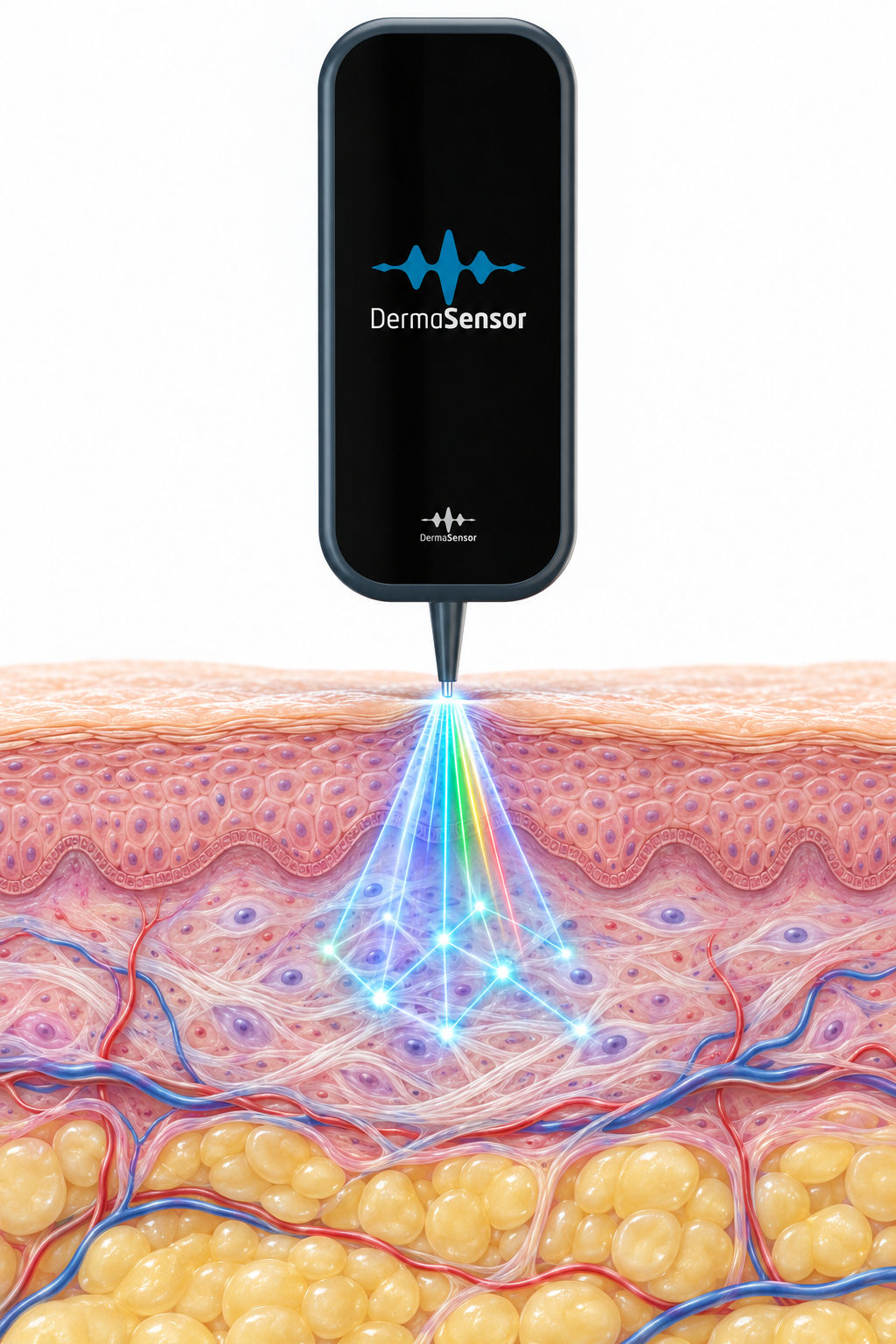
DermaSensor allows you to detect skin cancer signs beneath the surface that you can not see visually.
The DermaSensor's method is Elastic Scattering Spectroscopy (ESS) + AI.
With a dermatoscope, you can subjectively assess changes visible on the surface of the skin. DermaSensor scans deep into the skin and detects abnormal structures at the cellular and subcellular level, many of the same features that a dermatopathologist reviews with a microscope.
Scan cancer with us!
About DermaSensor
What is DermaSensor?
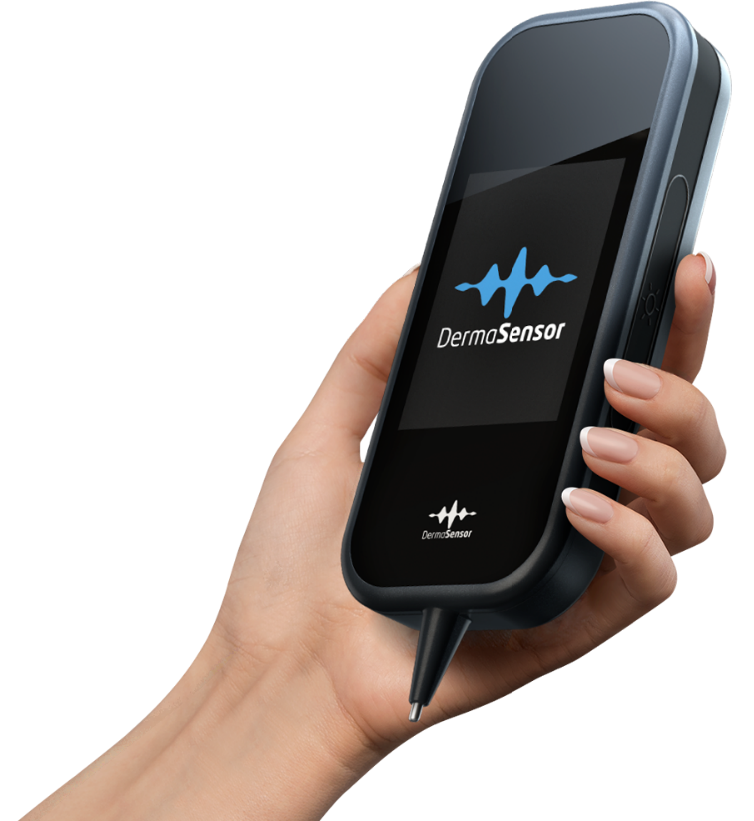
DermaSensor is a Class IIb medical device which is intended to assist qualified healthcare professionals in evaluating skin lesions suggestive of melanoma, basal cell carcinoma, and/or squamous cell carcinoma.
DermaSensor is used by qualified physicians (e.g. dermatologists or general practitioners) to immediately check suspicious moles or skin lesions for skin cancer.
The objective cancer risk results are displayed to the physician in a few seconds, so that they are optimally supported in the diagnostic and therapeutic decisions.

In various published clinical studies, DermaSensor achieves a sensitivity of approximately 90% to 96% and a specificity between 21% and 61%, depending on how strongly the lesions under investigation were previously classified as potentially cancerous.
In the FDA DERM-SUCCESS pivotal validation study the device sensitivity for melanoma was found to be at 96%. The specificity for correctly classifying as benign lesions biopsied by GPs was 21%, thus the device could help GPs avoid 21% of biopsied lesions.
In the supplement FDA DERM-ASSESS III study melanoma validation study the device sensitivity for melanoma was found to be 96%. The specificity for correctly classifying as benign lesions biopsied by dermatologists was 33%, thus the device could help dermatologists avoid 33% of biopsied lesions while still correctly biopsying nearly all melanomas.
The PATIENT SELECT study examined lesions that had been classified as potentially cancerous by the patients themselves (and not by physicians beforehand), DermaSensor achieved a specificity of 61% (77% in pigmented skin lesions).
What is ESS?
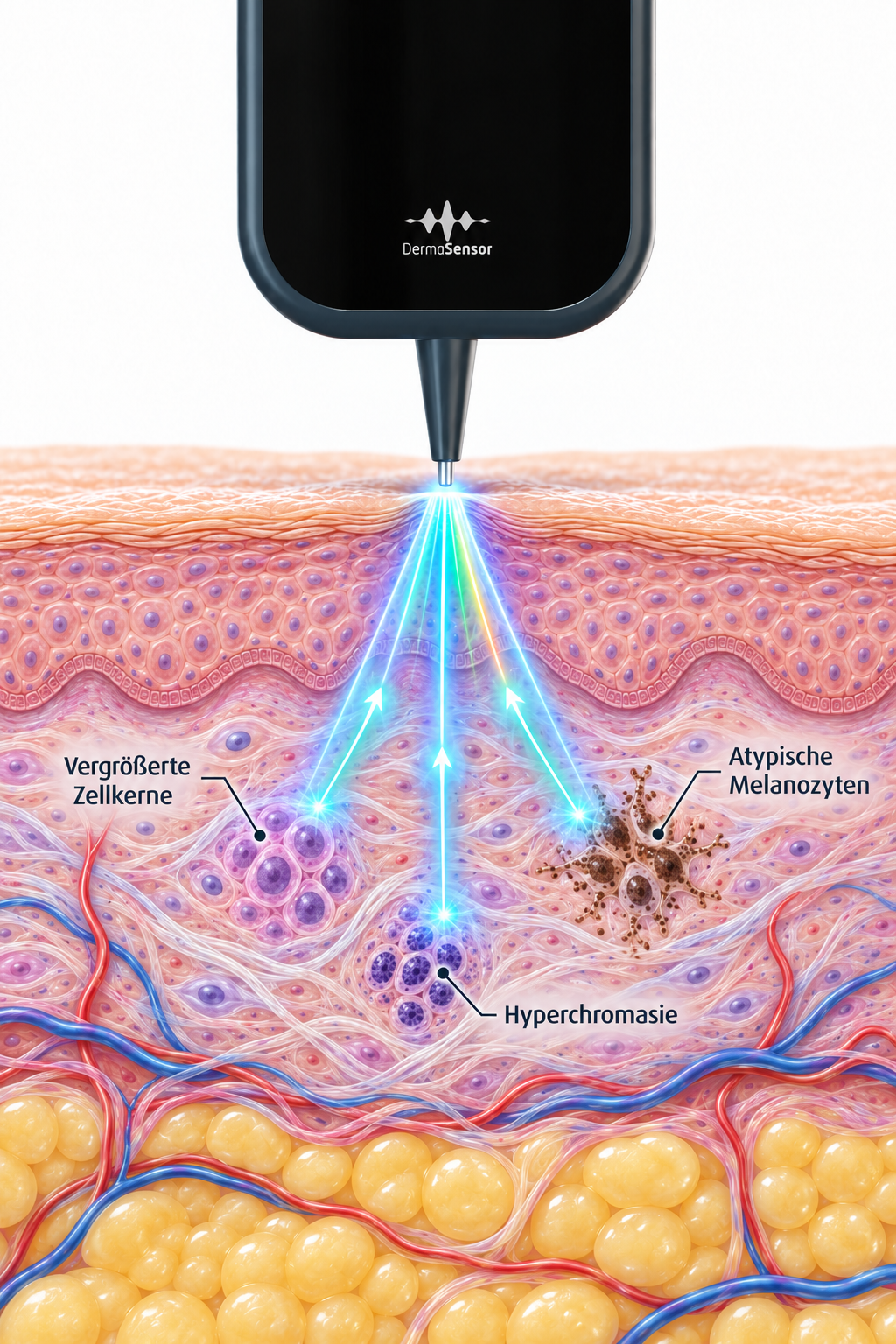
Elastic scattering spectroscopy is an optical recording technique that uses harmless light. It allows tissue to be assessed directly in the body in real time, without the need to remove a tissue sample. The light emitted by DermaSensor strikes cellular structures deep within the skin and is scattered and reflected differently based on the pathology features (e.g. nucleus size) of the cells. This is the only CE marked optical technology that provides any risk assessment of skin cancer by assessing cellular-level features rather than just the visual appearance in dermoscopy photos) that doctors already evaluate.
DermaSensor:
No billing via EBM in Germany -> GOÄ
The diagnostic service of skin cancer screening using DermaSensor is not a service covered by German statutory health insurance. The ESS with AI cannot be billed via the Uniform Assessment Scale (EBM) because the EBM is not compatible with analogous billing.
Services are provided on the basis of a private medical treatment contract, obligating patients to pay medical invoices based on the German fee schedule for physicians (GOÄ). Unlike the EBM, GOÄ codes can be applied analogously, meaning that the service "DermaSensor examination of a medically indicated, specifically documented skin lesion with medical evaluation" can be billed analogously.
About DERMALYTICA
DERMALYTICA is a division of ContraCare GmbH, which aims to bring medical devices to qualified physicians who offer skin cancer screening.
We do not believe that physician services can be replaced by AI in the near future. Patient-specific differential diagnosis is a physician service that can be supported by medical devices, but not replaced.